Independent · Evidence-based · New Zealand

Claims are cheap. We'll tell you straight up.

We examine the health claims made by New Zealand charities, wellbeing programmes and wellness brands — quoting them verbatim, then checking each one against peer-reviewed research and official register data. No rumours, no pile-ons. Just the claim, and the evidence.

10
claims checked in our first investigation
40+
primary sources cited — journals, registers, regulators
0
anonymous allegations published, ever
How we work

Every report follows the same three disciplines.

01

Quote, don't paraphrase

Each claim is reproduced word-for-word with a link to where it was published and when. We never critique a strawman — if we can't source the claim, we don't cover it.

02

Grade against primary sources

Meta-analyses, regulator decisions, official statistics and the Charities Register — not other people's opinions. Each claim gets a plain verdict: accurate, half-true, misleading, unsupported, pseudo-scientific, or false.

03

Publish the working

Every report ships as a readable web summary and a full PDF with complete citations. If we get something wrong, corrections go in the document, not down the memory hole.

The evidence, on the record

Exhibits from the KFG Report.

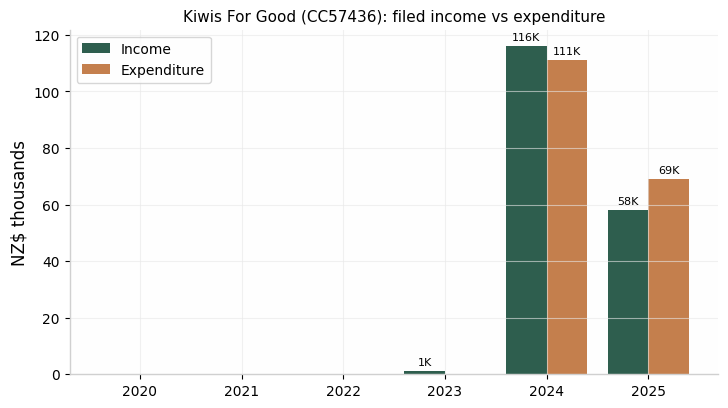
Bar chart of Kiwis For Good filed income versus expenditure, 2020 to 2025
Exhibit AFiled income vs expenditure — FY2025 revenue of NZ$58K against NZ$69K spent.
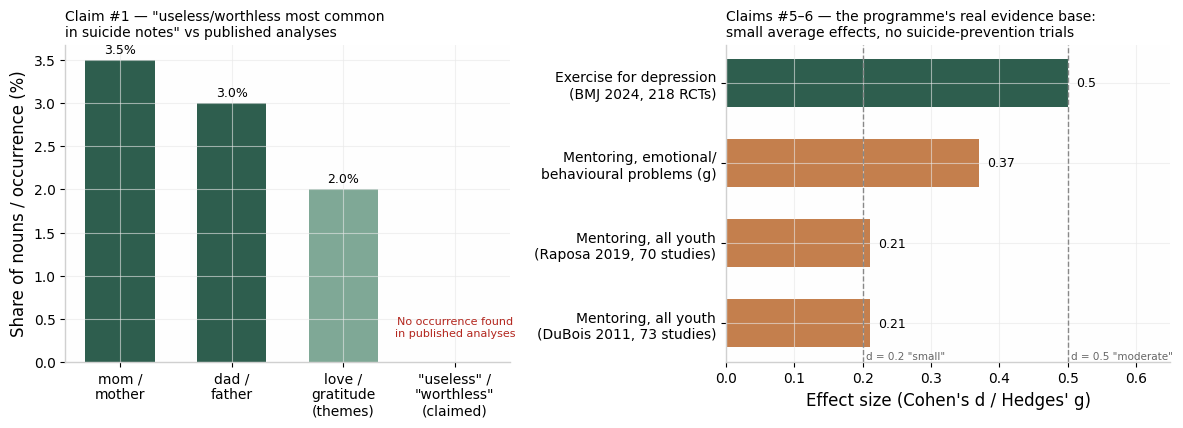
Two panels: published suicide-note content analyses versus the website's claim, and effect sizes from mentoring and exercise meta-analyses
Exhibit BThe evidence base behind Claims 1, 4 and 5 — what the literature actually shows.
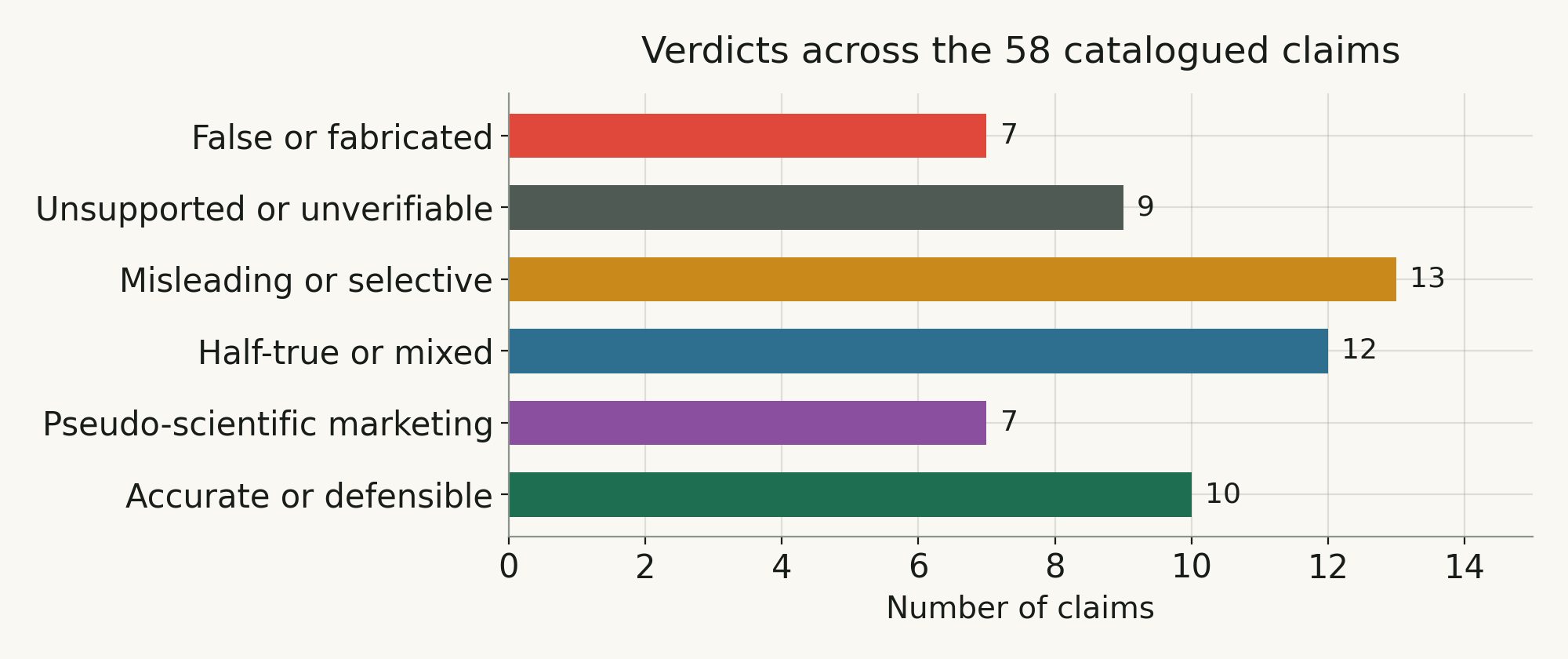
Bar chart of the verdict tally across the 58 catalogued claims
Exhibit CVerdicts across all 58 catalogued claims — 7 false, 13 misleading, 10 accurate.

Every exhibit ships with the full working — sources, retrieval dates and counter-evidence — in the interactive report and the complete PDF.

Investigations

Current reports

KFG Report · Mental-health charity

Kiwis For Good Foundation: what donors should know before giving

A registered Napier charity (CC57436) running a suicide-prevention programme for young men — with a trustee who is the long-time face of the Church of Scientology in NZ and director of its anti-psychiatry arm, a chairman selling an untested "trauma touch" therapy, and a website whose claims don't survive contact with the literature.

1 false6 misleading or unsupported2 accurate1 unverifiable
Read the interactive report →
CC57436
Registered charity. A registered officer of the Church of Scientology of NZ (CC27252) sits on its board.
Full evidence dossier available as PDF inside the report.
The next report is in preparation — we only publish when every claim is sourced and every verdict defensible. If there's an organisation whose health claims concern you, send us the claim, verbatim, with a link.
Principles

What we will and won't do

Facts over vibesRegister data is register data; it proves a fact (who sits on a board), not wrongdoing. We say exactly what each finding does and doesn't establish.
No ideology, either directionPseudo-science comes in every political flavour. We check claims against evidence, not against our preferences.
Right of replyBefore publication, named organisations receive our findings and a genuine opportunity to respond. Responses are published in full.
Corrections are visibleErrors are corrected in-line with a dated note. Credibility is the whole product.
Protect the vulnerable firstWhere a programme touches suicidal or traumatised people, we say plainly what safer, evidence-based alternatives exist — including free helplines.
Legal hygieneNew Zealand defamation law is real. Truth and honest opinion are our method, not just our defence.